
For years, compliance in software development lived at the very end of the lifecycle. QA teams would run audits, validate requirements, and generate reports just before release. It was slow, reactive, and frankly too late to catch critical risks.
That model is collapsing.
Today, compliance is being pulled directly into CI/CD pipelines. It’s no longer a checkpoint it’s a continuous system embedded into how software is built, tested, and deployed.
If your QA process still treats compliance as a final phase, you’re not just outdated you’re exposed.
The Shift: From “Audit After” to “Validate Always”
Traditional QA compliance looked like this:
- Requirements defined
- Development completed
- QA testing executed
- Compliance validated
- Release approved
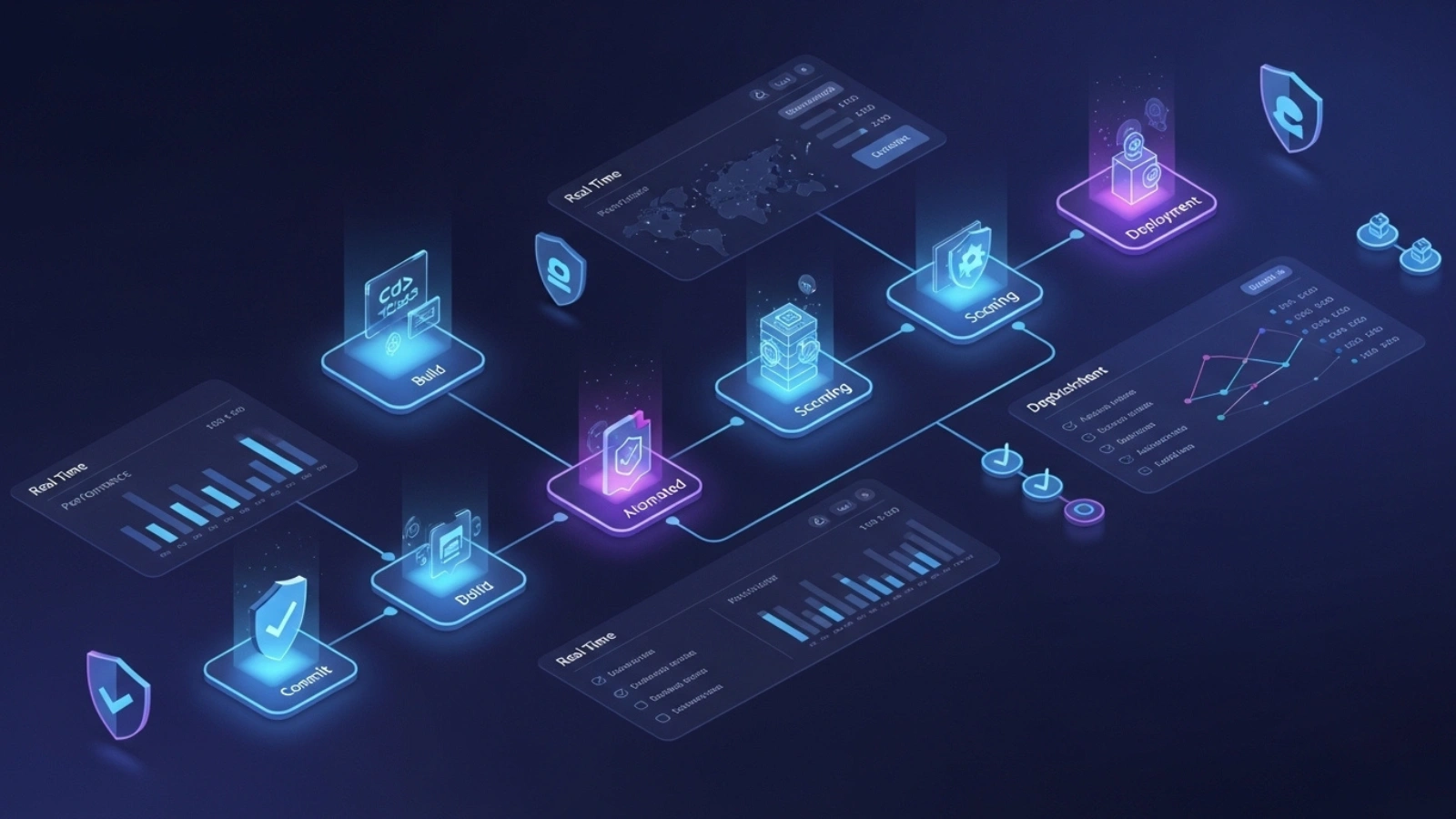
Now compare that with modern CI/CD pipelines:
- Code committed
- Automated tests triggered
- Security scans executed
- Accessibility checks validated
- Performance thresholds enforced
- Deployment blocked or approved automatically
This is not an incremental improvement. This is a structural shift.
Compliance is no longer something you verify.
It’s something you enforce continuously.
What “Compliance in CI/CD Pipelines” Actually Means
Let’s strip away the buzzwords.
Embedding compliance into CI/CD pipelines means:
1. Automated Quality Gates
Every build must pass predefined conditions before moving forward:
- Security vulnerabilities below threshold
- Performance benchmarks met
- Accessibility standards satisfied
- Test coverage maintained
If it fails → deployment stops.
No exceptions. No “we’ll fix it later.”
2. Continuous Testing, Not Scheduled Testing
Instead of running tests at specific stages:
- Tests run on every commit
- Regression suites execute automatically
- API and integration tests validate continuously
This creates immediate feedback loops instead of delayed surprises.
3. DevSecOps Integration
Security is no longer a separate team’s responsibility.
It’s embedded into the pipeline:
- Static code analysis (SAST)
- Dynamic testing (DAST)
- Dependency vulnerability scanning
If your pipeline doesn’t include this, you’re essentially shipping blind.
4. Accessibility as a First-Class Citizen
Accessibility checks are now automated:
- Color contrast validation
- Keyboard navigation testing
- ARIA compliance checks
This is critical because accessibility is no longer optional it’s legally enforceable in many regions.
5. Real-Time Compliance Reporting
Instead of generating reports manually:
- Dashboards track compliance status live
- Audit trails are automatically generated
- Every deployment is traceable
This is what enterprise clients now expect by default.
Why This Shift Is Happening (And Why You Can’t Ignore It)
1. Speed of Delivery Has Increased
With multiple deployments per day, manual compliance checks simply don’t scale.
If your compliance process slows down releases:
It will be bypassed.
2. Risk Is Higher Than Ever
Modern systems are:
- Distributed
- API-driven
- Cloud-native
A single missed issue can impact thousands (or millions) of users instantly.
Continuous compliance reduces that risk window.
3. Regulations Are Tightening
Global regulations around:
- Accessibility
- Data privacy
- Security
…are becoming stricter and more enforceable.
Companies now need:
- Proof of compliance
- Not just claims
And CI/CD pipelines provide that proof automatically.
Where Most QA Teams Fail (Let’s Be Brutal)
Here’s the uncomfortable reality:
QA Is Still Treated as a Phase
If your testing starts after development is “done,” you’re already behind.
Compliance Is Manual
Spreadsheets, checklists, manual audits this doesn’t scale and introduces human error.
No Pipeline Integration
If QA tools are not connected to CI/CD pipelines:
- They are slow
- They are ignored
- They are ineffective
No Ownership of Quality Gates
If developers can override failures easily:
Your compliance system is fake.
What a Mature Compliance CI/CD Pipeline Looks Like
Let’s define what “good” actually looks like:
Integrated Testing Layers
- Unit tests
- API tests
- UI tests
- Performance tests
- Security tests
All running automatically.
Enforced Quality Gates
No deployment without:
- Passing tests
- Meeting thresholds
- Clearing compliance checks
Shift-Left + Shift-Right Strategy
- Early validation during development
- Continuous monitoring in production
Observability + Feedback Loops
- Logs, metrics, and traces feeding back into QA
- Production issues automatically creating test cases
Audit-Ready Infrastructure
Every change is:
- Logged
- Tested
- Verified
- Traceable
No scrambling during audits.
The Business Impact (This Is What Actually Matters)
This isn’t just a technical evolution. It’s a business advantage.
Faster Releases Without Risk
Automation removes bottlenecks while maintaining quality.
Reduced Cost of Defects
Catching issues early is exponentially cheaper than fixing them later.
Higher Client Trust
When you can prove compliance continuously, not just claim it:
You win enterprise deals.
Competitive Differentiation
Most companies are still stuck in old QA models.
If you adopt this early:
You position yourself as a next-gen QA provider.
What You Should Do Next (No Excuses)
If you’re serious about modern QA, here’s your baseline:
1. Integrate QA Into CI/CD Pipelines Immediately
- No separate testing environments
- No isolated QA processes
2. Define Non-Negotiable Quality Gates
- Security
- Performance
- Accessibility
- Functional coverage
3. Automate Everything That Repeats
Manual testing should be strategic, not operational.
4. Build Compliance Dashboards
If you can’t see compliance in real-time:
You don’t control it.
5. Reposition QA as a Product Function
QA is not support.
QA is risk management + product quality assurance.
Final Thought: Adapt or Become Irrelevant
The industry is moving toward:
Continuous compliance, automated enforcement, and pipeline-driven quality.
If your QA strategy still relies on:
- Manual validation
- Late-stage testing
- Static reports
Then you’re not just behind you’re replaceable.
The companies that win will be the ones who embed compliance into the system itself.
Everything else is noise.
For more Contact US