

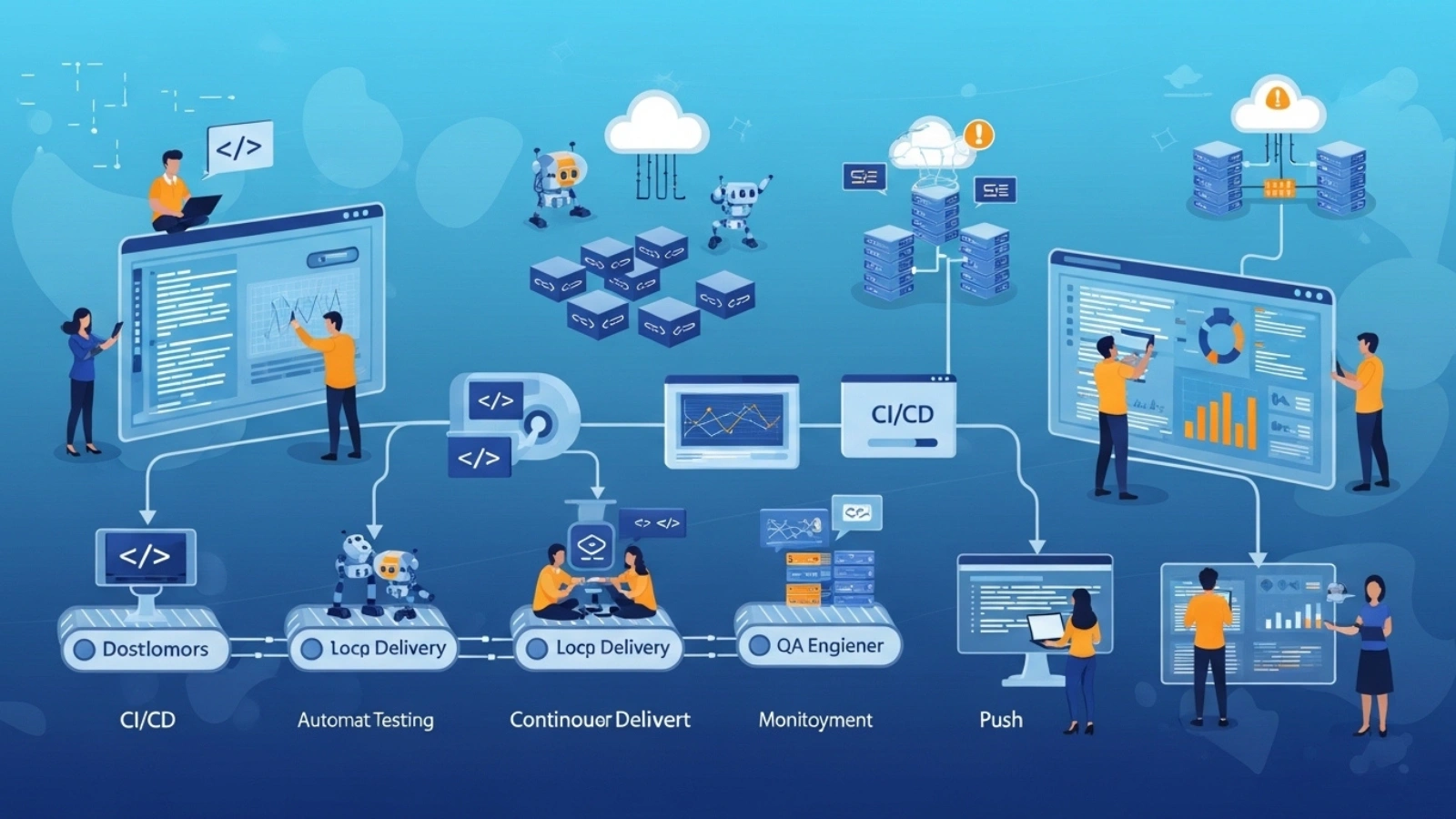
The modern software landscape is defined by speed, complexity, and continuous innovation. Organizations are no longer releasing software in long cycles they are delivering updates weekly, daily, or even multiple times a day. This rapid pace has fundamentally reshaped how software is developed, tested, and deployed.
At the center of this transformation is automation.
In 2026, It is no longer confined to a single phase of testing. It is deeply integrated across the entire Software Development Life Cycle (SDLC) and Software Testing Life Cycle (STLC). From requirement validation to post-release monitoring, It enables organizations to maintain quality while delivering software at unprecedented speed.
This shift marks a transition from manual, phase-based workflows to continuous, automated ecosystems where development and testing operate as a unified system.
The Evolution of SDLC and STLC
Traditionally, SDLC and STLC were treated as separate processes.
- SDLC focused on planning, design, development, and deployment
- STLC focused on testing after development was completed
This sequential approach created several challenges:
- late defect detection
- communication gaps between teams
- delayed releases
- increased costs of fixing bugs
With the rise of Agile and DevOps, these boundaries have dissolved. Development and testing now happen simultaneously, and automation acts as the bridge that connects these processes.
Today, SDLC and STLC are no longer separate cycles they are interconnected, continuous workflows powered by it.
Why Automation Is Embedded Across the Lifecycle
Several factors have driven the widespread adoption across SDLC and STLC.
Increasing Software Complexity
Modern applications are built using microservices, APIs, cloud-native architectures, and third-party integrations. Managing these systems manually is impractical.
It helps manage this complexity by ensuring consistent validation across all components.
Demand for Faster Releases
Continuous integration and continuous delivery (CI/CD) pipelines require rapid feedback. It enables instant validation of code changes, ensuring that development speed does not compromise quality.
Need for Consistent Quality
Manual processes are prone to human error and inconsistency. It ensures repeatable and reliable execution of tasks, improving overall quality.
Cost Efficiency
It reduces manual effort, allowing teams to focus on higher-value activities such as strategy, innovation, and user experience.
Automation in the Requirements Phase
It now begins at the earliest stage of the lifecycle requirements gathering.
Advanced tools can analyze requirements and user stories to:
- identify inconsistencies and ambiguities
- generate acceptance criteria automatically
- create initial test scenarios
This early validation ensures that development aligns with business goals and reduces the risk of defects later in the lifecycle.
Automation in Design and Architecture
During the design phase, automation helps teams validate architectural decisions.
Tools can simulate system behavior, evaluate performance under different conditions, and identify potential bottlenecks.
This proactive approach allows teams to address issues before development begins, reducing rework and improving system reliability.
Automation in Development
It plays a critical role during development, supporting developers in writing high-quality code.
Static Code Analysis
Automated tools analyze code for:
- security vulnerabilities
- coding standard violations
- performance inefficiencies
These checks run continuously, ensuring code quality is maintained.
Unit Testing Automation
Developers write automated unit tests to validate individual components.
These tests run automatically with every code change, providing immediate feedback and preventing defects from propagating.
Code Integration Validation
Automation ensures that new code integrates seamlessly with existing systems.
Continuous integration pipelines automatically build and test code, reducing integration issues.
Automation in Testing (STLC)
Testing is where automation delivers the most visible impact, but its scope has expanded significantly.
Functional Testing
Automated tests validate application functionality across multiple scenarios, ensuring consistent behavior.
API Testing
APIs are the backbone of modern applications. Automated API testing ensures seamless communication between services.
Regression Testing
Regression tests run automatically to verify that new changes do not break existing functionality.
Performance Testing
It tools simulate real-world traffic to evaluate system performance under load.
Security Testing
Automated security tests identify vulnerabilities such as injection attacks, authentication flaws, and data leaks.
Continuous Integration and Continuous Testing
It is a core component of CI/CD pipelines.
Every code commit triggers:
- automated builds
- automated test execution
- instant feedback
This continuous testing approach ensures that defects are identified early, reducing the cost and effort required to fix them.
Automation in Deployment
It extends beyond testing into deployment processes.
Continuous Delivery and Deployment
Automated pipelines deploy applications to staging or production environments without manual intervention.
Infrastructure as Code (IaC)
Infrastructure is defined and managed through code, ensuring consistency across environments.
Automated Release Validation
Post-deployment checks verify that applications are functioning correctly after release.
Automation in Monitoring and Feedback (Shift-Right)
Modern SDLC includes post-release monitoring as a critical component.
It tools track:
- application performance
- user behavior
- error rates
- system health
This real-time data provides insights into how applications perform in production environments.
The Role of QA in Lifecycle Automation
Quality assurance teams are evolving into quality engineering teams that oversee the entire lifecycle.
Their responsibilities now include:
- designing strategies
- integrating testing into CI/CD pipelines
- analyzing production data
- ensuring end-to-end quality
Organizations such as QA Ninjas adopt lifecycle automation practices to deliver high-quality software efficiently.
Benefits of Embedded Automation
Embedding automation across SDLC and STLC provides several key benefits.
Faster Time to Market
It accelerates development and testing, enabling faster releases.
Improved Quality
Continuous validation ensures defects are identified and resolved early.
Scalability
Automation allows teams to handle complex systems without increasing resources.
Better Collaboration
It creates transparency and alignment between development, testing, and operations teams.
Challenges in Lifecycle Automation
Despite its advantages, implementing lifecycle automation can be challenging.
Tool Integration
Integrating multiple tools into a unified pipeline requires careful planning.
Skill Gaps
Teams need expertise in automation, scripting, and DevOps practices.
Maintenance Overhead
Automation frameworks must be updated as applications evolve.
Best Practices for Successful Automation
To maximize the benefits of it, organizations should:
- start automation early in the lifecycle
- focus on high-impact areas
- maintain clean and scalable frameworks
- integrate automation with CI/CD pipelines
- continuously monitor and improve processes
The Future of SDLC & STLC
It will continue to evolve with advancements in AI and machine learning.
Future trends include:
- AI-driven test generation
- self-healing frameworks
- predictive defect analysis
- autonomous testing systems
These innovations will further integrate automation into every stage of software delivery.
Conclusion
Automation is no longer a separate activity it is deeply embedded across SDLC and STLC.
From requirements to deployment and beyond, It ensures that software development is faster, more efficient, and more reliable.
Organizations that embrace lifecycle gain a significant competitive advantage by delivering high-quality software at speed.
In the modern digital era, It is not just a tool it is the foundation of continuous, intelligent software delivery.
For more Contact US