

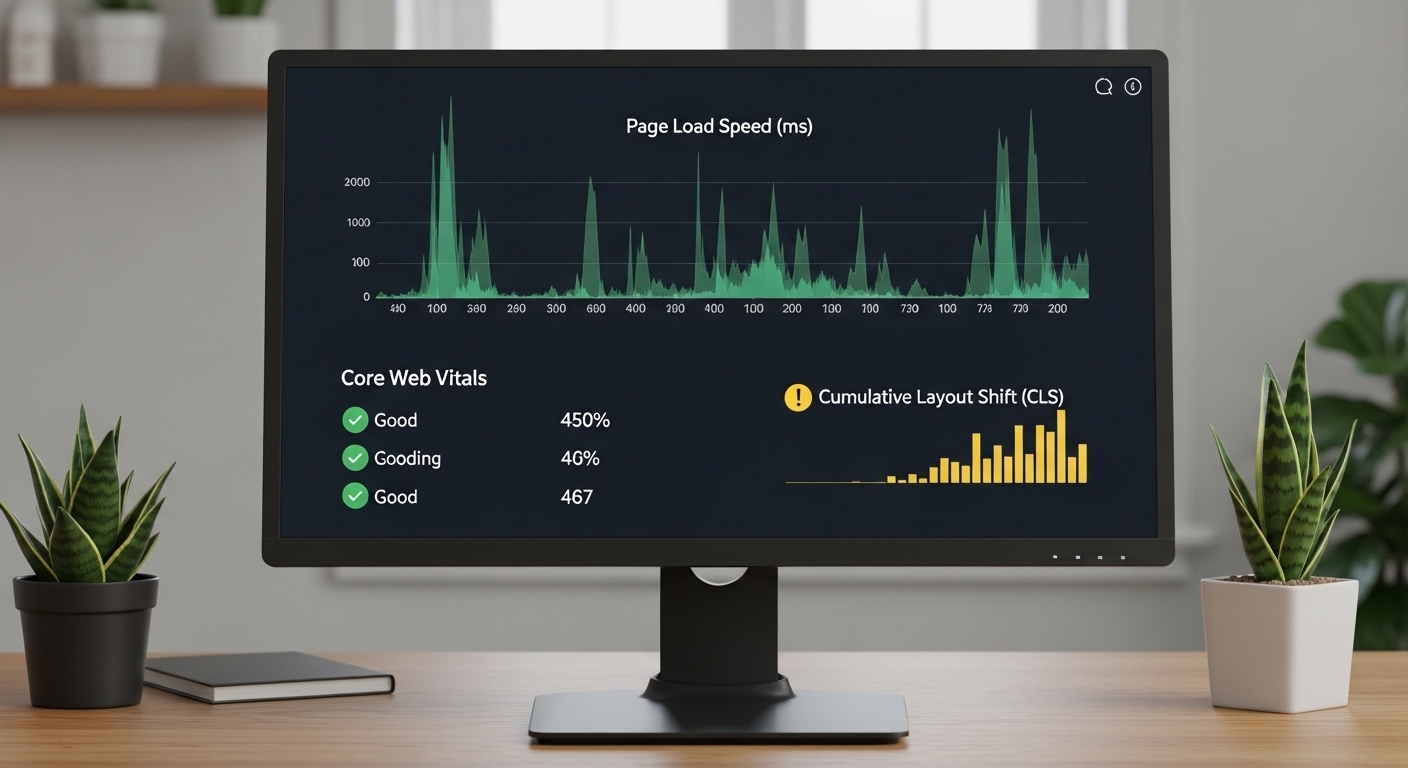
To address these expectations, organizations rely on Core Web Vitals, a set of user-focused performance metrics introduced by Google. Despite rapid technological advancements, new frameworks, and AI-driven optimization tools, Core Web Vitals still dominate performance strategy in 2026.
These metrics remain the most reliable way to measure how users actually experience a website, making them essential for developers, QA teams, and digital businesses alike.
Understanding Core Web Vitals in Detail
Core Web Vitals are designed to evaluate real-world user experience rather than just technical performance. They focus on three critical aspects: loading speed, responsiveness, and visual stability.
Largest Contentful Paint (LCP): Measuring Perceived Load Speed
LCP measures how quickly the main content of a page becomes visible to users. This is typically the largest element on the screen, such as a hero image or headline.
- Good: under 2.5 seconds
- Needs improvement: 2.5 – 4 seconds
- Poor: over 4 seconds
A fast LCP ensures users can quickly access meaningful content, reducing bounce rates and improving engagement.
Interaction to Next Paint (INP): Measuring Responsiveness
INP evaluates how quickly a website responds to user interactions such as clicks, taps, or keyboard input.
- Good: under 200 milliseconds
- Needs improvement: 200–500 milliseconds
- Poor: over 500 milliseconds
INP is now a critical metric because it reflects how responsive a website feels during real user interactions.
Cumulative Layout Shift (CLS): Measuring Visual Stability
CLS measures how much elements shift unexpectedly while a page is loading.
- Good: below 0.1
- Needs improvement: 0.1–0.25
- Poor: above 0.25
Stable layouts improve usability and prevent accidental clicks, especially on mobile devices.
Why Core Web Vitals Continue to Dominate
Despite the emergence of new performance tools and techniques, Core Web Vitals remain the foundation of performance optimization strategies.
1. Alignment with Real User Experience
Core Web Vitals are designed around how users perceive performance. Unlike traditional metrics such as page load time, these metrics focus on actual user interaction and experience.
This alignment ensures that performance improvements directly benefit users.
2. Strong Influence on Search Engine Rankings
Search engines prioritize user experience, and Core Web Vitals are part of ranking algorithms.
Websites with better Core Web Vitals scores are more likely to rank higher in search results, making performance optimization a key SEO strategy.
3. Direct Impact on Business Metrics
Performance directly affects business outcomes such as:
- conversion rates
- customer retention
- session duration
- bounce rates
Studies consistently show that faster websites lead to higher conversions and better user engagement.
The Rise of Performance-First Development
Modern development teams are adopting a performance-first approach, where performance considerations are integrated into the development process from the beginning.
Instead of optimizing performance after development, teams now define performance goals during the design phase.
This includes:
- setting performance budgets
- minimizing resource usage
- optimizing frontend frameworks
- designing efficient APIs
Performance-first development ensures that Core Web Vitals remain a central focus throughout the lifecycle.
Common Performance Challenges Affecting Core Web Vitals
Many websites struggle to meet Core Web Vitals benchmarks due to common performance issues.
Heavy JavaScript Execution
Large JavaScript bundles can delay rendering and slow down interactions. Reducing unused scripts and optimizing execution improves both LCP and INP.
Unoptimized Images and Media
Images are often the largest elements on a page. Using optimized formats such as WebP and AVIF can significantly improve load times.
Slow Backend Performance
Server response time directly affects LCP. Slow APIs and database queries can delay content delivery.
Dynamic Content Without Reserved Space
Failing to define layout dimensions can cause elements to shift during loading, leading to poor CLS scores.
Strategies for Improving Core Web Vitals
Organizations use a combination of techniques to optimize performance.
Content Delivery Networks (CDNs)
CDNs reduce latency by delivering content from servers closer to users.
Lazy Loading
Lazy loading ensures that non-critical resources load only when needed, improving initial load performance.
Code Splitting and Minification
Breaking code into smaller chunks and removing unnecessary elements reduces page size.
Efficient Caching
Caching reduces repeated server requests and improves loading speed.
Optimized Rendering
Using techniques such as server-side rendering (SSR) or static site generation (SSG) improves performance.
Continuous Performance Monitoring
Performance optimization is not a one-time effort. Modern teams rely on continuous monitoring to maintain performance standards.
Real User Monitoring (RUM)
RUM tools collect data from actual users, providing insights into real-world performance.
Synthetic Testing
Synthetic tests simulate user interactions to identify performance issues in controlled environments.
Performance Dashboards
Dashboards provide real-time visibility into key metrics, helping teams track performance trends.
The Role of QA in Core Web Vitals Optimization
Quality assurance teams play a critical role in ensuring performance standards are met.
QA responsibilities include:
- validating performance across devices
- conducting load and stress testing
- monitoring production performance
- identifying bottlenecks in user journeys
Organizations such as QA Ninjas integrate performance testing into QA strategies to ensure websites meet Core Web Vitals benchmarks.
Mobile Performance and Core Web Vitals
Mobile users now account for the majority of web traffic. However, mobile devices often have slower networks and less processing power.
This makes mobile optimization critical.
Key strategies include:
- optimizing mobile layouts
- reducing script execution
- minimizing network requests
- using responsive design
Ensuring strong Core Web Vitals on mobile devices is essential for overall performance success.
AI and the Future of Performance Optimization
AI is beginning to play a role in website performance optimization.
AI-powered tools can:
- analyze performance bottlenecks
- suggest optimization strategies
- automate performance testing
- predict potential issues
These tools will make performance optimization more intelligent and efficient in the future.
Core Web Vitals Beyond Speed
Modern performance strategies go beyond simple speed metrics.
Core Web Vitals emphasize:
- responsiveness
- stability
- user interaction
This holistic approach ensures that websites deliver a complete and satisfying user experience.
The Competitive Advantage of Performance Optimization
Organizations that prioritize Core Web Vitals gain a significant competitive advantage.
Benefits include:
- higher search rankings
- better user engagement
- increased conversions
- stronger brand reputation
In competitive markets, performance can be the deciding factor between success and failure.
Conclusion
Core Web Vitals continue to dominate performance strategy because they focus on what truly matters user experience.
By measuring loading speed, responsiveness, and visual stability, these metrics provide a clear and actionable framework for improving website performance.
In 2026, performance is no longer optional. It is a critical component of digital success.
Organizations that prioritize Core Web Vitals will be better positioned to deliver high-quality user experiences, achieve higher search rankings, and drive long-term business growth.
For more Contact US