

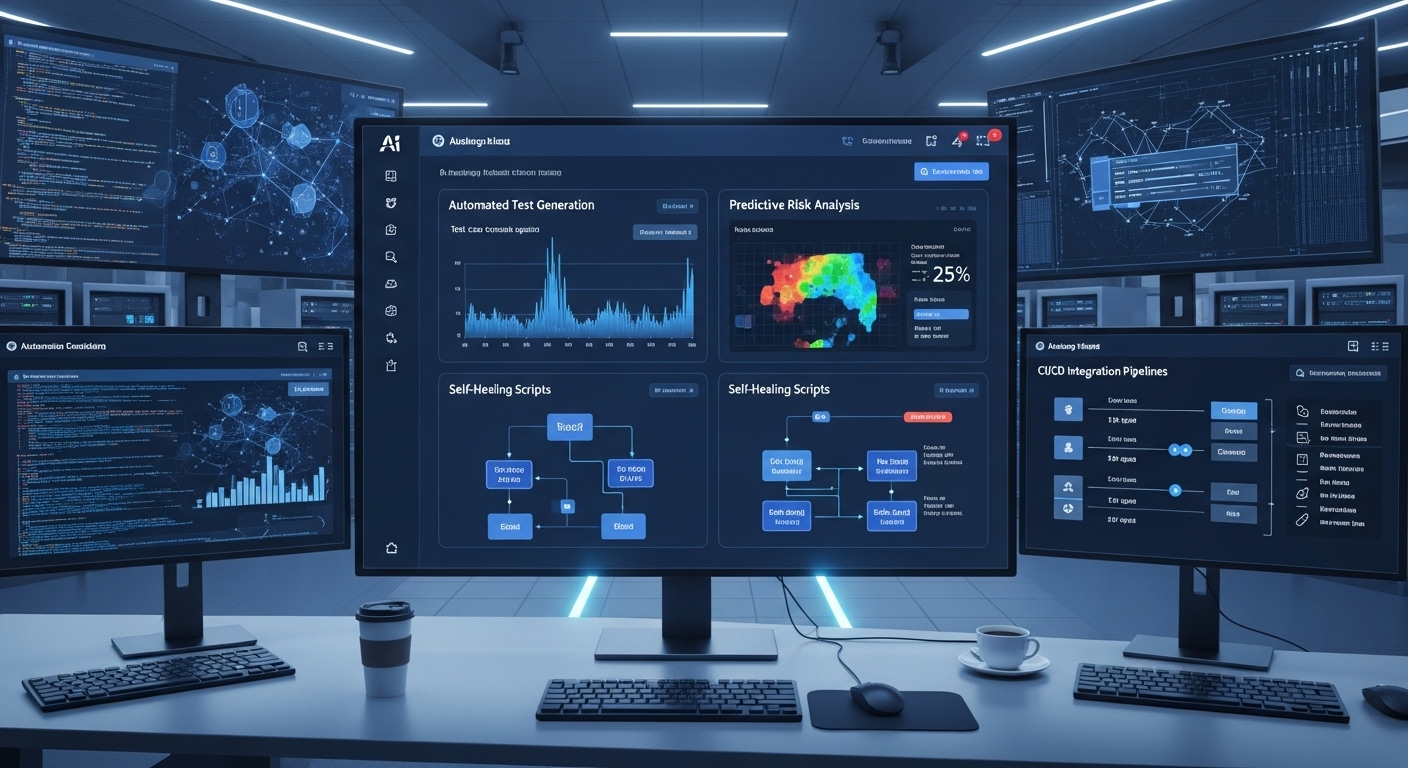
Automation testing has long been associated with writing scripts, maintaining frameworks, and executing repetitive validations. For years, automation teams focused on improving coverage, increasing speed, and reducing manual effort. But in 2026, automation testing is undergoing a significant transformation.
AI-augmented test generation is no longer experimental it is becoming mainstream.
Modern software systems are too complex, dynamic, and fast-moving for purely manual script creation. Frequent UI updates, evolving APIs, continuous deployments, and multi tenant architectures create testing environments that demand smarter solutions. Artificial Intelligence is now being integrated into automation tools to assist, enhance, and accelerate test creation and maintenance.
What Is AI Augmented Test Generation?
AI-augmented test generation refers to the use of machine learning models and intelligent algorithms to automatically create, optimize, and maintain automated test cases.
Instead of testers manually defining every scenario, AI tools can:
- Analyze user stories and requirements
- Observe application behavior
- Detect usage patterns
- Identify risk-prone areas
- Generate test scripts dynamically
This does not eliminate the role of testers. Instead, it enhances their ability to focus on strategy and risk analysis while AI handles repetitive design tasks.
Why It Is Becoming Mainstream
Rapid Release Cycles
With CI/CD pipelines pushing updates daily or even hourly, traditional automation approaches struggle to keep up. AI-assisted tools adapt quickly to UI changes, updated locators, and modified workflows.
Self-Healing Test Scripts
One of the biggest problems in automation has been script fragility. Minor UI changes break large test suites. AI-powered systems now detect locator changes and auto-update scripts, significantly reducing maintenance overhead.
Smarter Test Coverage
AI systems analyze code changes and production data to determine which areas are most at risk. Instead of running entire regression suites, they prioritize relevant test scenarios, making pipelines faster and more reliable.
Production Feedback Integration
Modern AI tools use logs, telemetry, and failure patterns from production to generate new regression scenarios. Testing is no longer isolated from real-world usage.
How AI Is Changing the Role of Automation Engineers
AI is not replacing automation engineers. It is elevating them.
Instead of focusing primarily on script writing, engineers now:
- Design test strategies
- Validate AI generated scenarios
- Interpret anomaly reports
- Define risk-based priorities
- Improve test architecture
Automation engineers are becoming quality strategists, using AI as an assistant rather than a substitute.
Benefits of AI Augmented Test Generation
Faster Test Creation
AI reduces time spent manually writing repetitive test cases.
Lower Maintenance Cost
Self healing capabilities minimize script breakage.
Risk-Based Optimization
Tests are generated and prioritized based on business impact.
Improved Coverage Accuracy
AI identifies edge cases that manual planning might overlook.
Continuous Learning
Systems improve as they process more execution data.
Challenges and Limitations
Despite its benefits, AI augmented testing has boundaries.
- AI cannot fully understand business context without guidance.
- Over-reliance on automation intelligence may overlook strategic risk.
- Training data quality impacts AI effectiveness.
- Human validation remains essential for critical scenarios.
AI enhances testing it does not eliminate the need for expertise.
The Shift Toward Intelligent Automation Services
AI-augmented test generation testing services are evolving from script-based execution models to intelligence driven validation strategies. Organizations increasingly expect automation partners to:
- Provide AI integrated frameworks
- Reduce regression cycle time
- Improve release confidence
- Align automation with business risk
Forward-thinking quality engineering teams, including firms like QANinjas, integrate AI assisted automation within broader risk-based testing strategies rather than treating it as a standalone feature.
What This Means for the Future
AI-augmented test generation is not a trend it is a structural shift.
In the coming years, we can expect:
- Predictive defect detection
- Intelligent regression suite trimming
- Natural language test creation
- Automated risk modeling
- Deeper production data driven validation
AI-augmented test generation testing will continue moving from execution-heavy to insight-driven.
Conclusion
AI-augmented test generation is becoming mainstream because modern software demands adaptive, intelligent validation systems. While traditional automation focuses on script coverage, AI enhanced testing focuses on relevance, resilience, and risk awareness.
The future of automation is not about replacing testers with machines. It is about combining human expertise with intelligent systems to deliver faster releases, stronger reliability, and greater confidence in every deployment.
AI-augmented test generation is evolving and AI is leading that evolution. Let’s Discuss Contact Us