

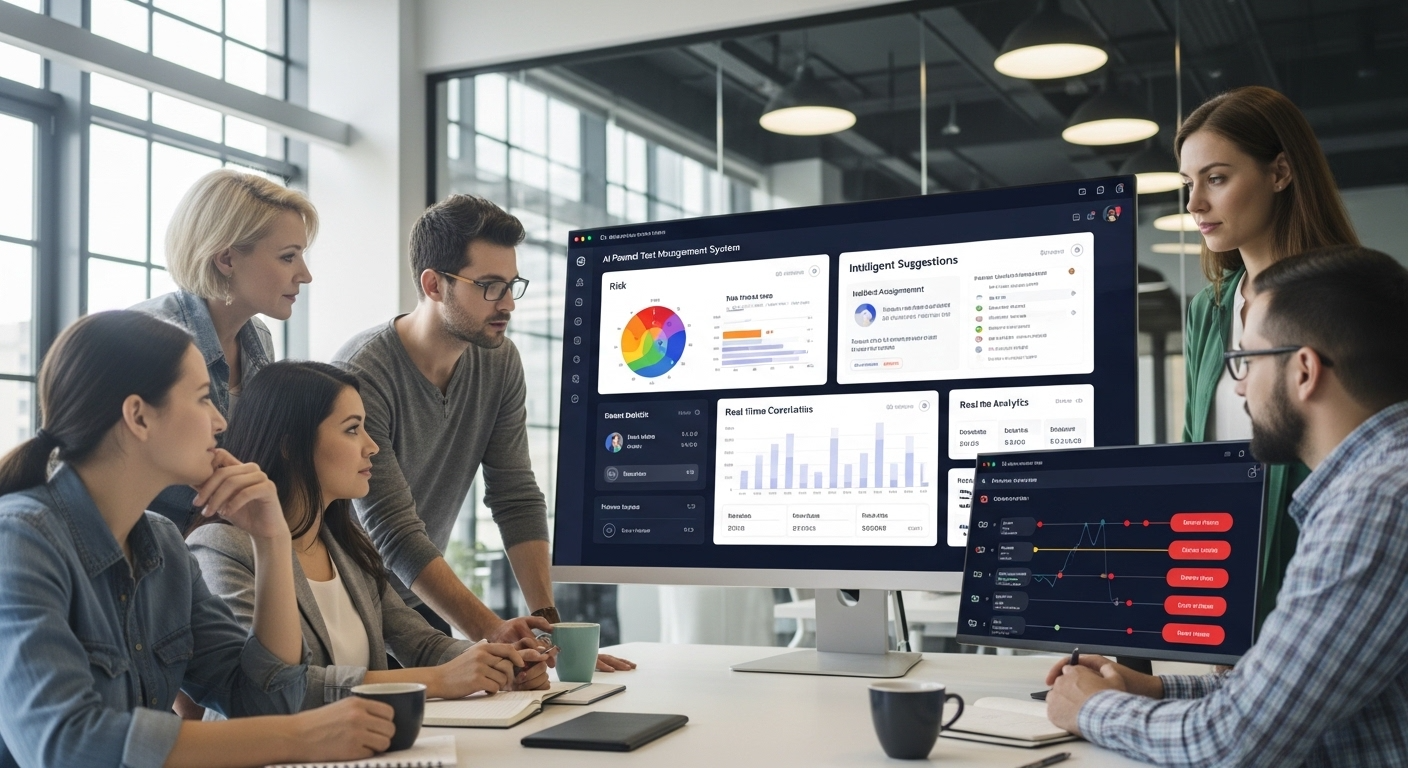
For years, bug triage meetings were routine and often exhausting. QA teams logged defects, developers reviewed them, product managers debated priority, and long discussions followed over severity labels. The process was manual, repetitive, and sometimes inconsistent.
In 2026, that model is rapidly evolving.
AI-powered bug triage is going mainstream.
Modern test management and bug tracking systems are no longer passive ticket repositories. They now use artificial intelligence to analyze, categorize, prioritize, and even predict the impact of defects before a human reviewer intervenes.
Bug triage is transforming from manual sorting into intelligent decision support.
The Traditional Bug Triage Problem
Manual triage processes often suffer from:
- Duplicate defect creation
- Incorrect severity tagging
- Delayed prioritization
- Overloaded development queues
- Lack of business impact visibility
When hundreds of defects accumulate in agile or continuous delivery environments, human-only triage becomes inefficient and error-prone.
As release cycles accelerate, organizations need faster, smarter classification.
What Is AI-Powered Bug Triage?
AI-powered bug triage leverages machine learning, natural language processing (NLP), and historical defect data to automatically:
- Categorize defects by type
- Predict severity and priority
- Detect duplicate tickets
- Suggest root causes
- Assign tickets to the right team
- Correlate test failures with production incidents
Instead of waiting for triage meetings, systems analyze defects in real time.
This shortens decision cycles dramatically.
Smart Duplicate Detection
One of the most time-consuming triage tasks is identifying duplicate bugs.
Modern AI engines analyze:
- Error messages
- Stack traces
- Historical ticket patterns
- Affected modules
- User descriptions
They can detect duplicates with high accuracy, preventing backlog inflation and reducing redundant investigations.
This alone saves hours of manual effort every sprint.
Severity & Risk Prediction
Traditional severity labels rely on human judgment. AI-powered tools now evaluate risk based on:
- Frequency of occurrence
- Affected customer segments
- Revenue-impacting modules
- SLA exposure
- Past defect impact history
The result is a risk score, not just a label.
Defects are prioritized based on potential business impact rather than subjective classification.
Intelligent Assignment
Assigning bugs to the correct developer or team is another bottleneck.
AI systems analyze:
- Historical resolution patterns
- Code ownership metadata
- Component dependencies
- Past contributor activity
The tool recommends or automatically assigns the ticket to the most relevant owner.
This reduces triage friction and accelerates resolution time.
Integration with CI/CD Pipelines
AI-powered bug triage is not isolated from development workflows.
Modern systems integrate directly with:
- Continuous Integration pipelines
- Test automation frameworks
- Version control systems
- Observability dashboards
When a pipeline fails, the system:
- Analyzes failure logs
- Correlates with known defect patterns
- Suggests probable root causes
- Creates structured defect reports automatically
Bug creation becomes contextual and intelligent, not manual and fragmented.
Production-Driven Prioritization
A major advancement in 2026 is the integration of production telemetry into triage systems.
If a test failure matches:
- A spike in production errors
- Latency anomalies
- Real user crash reports
The defect priority automatically increases.
This ensures that triage decisions reflect real-world impact not just lab conditions.
Benefits of AI-Powered Bug Triage
Faster Decision-Making
Automated classification reduces triage time.
Reduced Noise
Duplicate detection prevents clutter.
Business-Aligned Prioritization
Risk-based scoring aligns defects with revenue impact.
Improved Developer Productivity
Correct assignment shortens investigation cycles.
Continuous Learning
The system improves as it processes more data.
Human Oversight Still Matters
Despite its advantages, AI does not replace judgment.
Human expertise remains essential for:
- Complex architectural decisions
- Risk interpretation
- Customer context evaluation
- Release strategy trade-offs
AI supports triage it does not eliminate strategic thinking.
The best-performing QA organizations combine automation with human validation.
Forward-thinking quality engineering teams, including organizations like QANinjas, are integrating AI-assisted triage into broader risk-based testing frameworks to improve release confidence and reduce production defects.
The Shift from Defect Counting to Risk Management
Historically, teams measured quality by:
- Number of defects found
- Defect closure rates
- Open vs closed ticket ratios
In modern environments, success is measured by:
- Reduction in production leakage
- Lower time-to-resolution
- Business risk mitigation
- Customer experience stability
AI-powered bug triage enables this shift by surfacing risk insights earlier.
Why It’s Going Mainstream
The acceleration of AI-powered triage is driven by:
- Faster release cycles
- Increased software complexity
- Distributed teams
- Continuous delivery expectations
- Demand for real-time quality insights
Manual triage cannot scale in multi-cloud, microservices-based environments.
Automation and intelligence are no longer optional they are necessary.
Conclusion
AI-powered bug triage is moving from experimental feature to enterprise standard. By automating classification, prioritization, and assignment, organizations reduce manual overhead while improving accuracy and speed.
Bug tracking is no longer just about logging issues. It is about understanding risk, predicting impact, and protecting business outcomes.
In 2026, triage meetings are becoming shorter because intelligence is built into the tools.
And that marks a fundamental shift in how quality is managed.
For more details Contact Us